Career pathway
Population & Public Health
Improve health at the scale of a whole population.
Using linked health data to understand disease, inequality and long-term conditions across communities - the analytics that public health runs on.
Register freeAround 5 hours, at your own pace
About this pathway
Population health asks a different question from clinical care: not "how do I treat this patient?" but "why is this community sicker than that one, and what would change it?" Answering it means working with health data at national scale - millions of records, linked across primary care, hospitals and beyond - and knowing how to turn what you find into decisions.
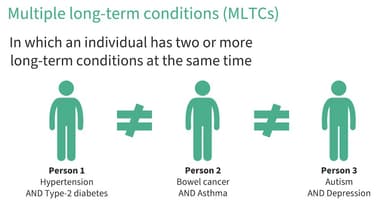
This pathway is a curated set of six sessions from HDR UK and its partners. It opens with the defining public-health challenge of the decade - multiple long-term conditions - in three short explainers: what they are, which datasets answer questions about them, and how the research community does the work well. It then moves from measurement to action: healthcare data driving service change against inequality, a worked example of linked national data answering an urgent equity question during the pandemic, and how the pandemic reshaped the secure data environments public-health analysts now work in.
Careers run from public-health analyst into senior and consultant roles, into epidemiology, and into population-health leadership at integrated care system or national level - in NHS England, ICSs, the UK Health Security Agency, government programmes, public-health charities and university departments. Demand from public-sector and charity employers is high.
What you'll be able to do
- Explain what multiple long-term conditions are and why they matter for population health
- Identify the datasets that answer population-scale questions
- Describe how healthcare data is used to address inequality and change services
- Read a linked-data population study critically
- Understand how secure data environments changed public-health analytics
What's in this pathway
6 steps
Before you start
Start with Health Data Fundamentals
How UK health data is collected, governed, standardised and accessed - the foundation every health data career is built on.
Who this pathway is for
Analysts moving from operational reporting into population-level questions; epidemiologists and public-health trainees adding modern data methods; anyone working in an ICS, local authority or national programme who needs to read population data critically. Take Health Data Fundamentals first if data access and governance are new to you.
Ready to work towards this career?
Using linked health data to understand disease, inequality and long-term conditions across communities - the analytics that public health runs on.