Pathway
Research Culture, Careers & Collaboration
Build a research career that lasts.
How interdisciplinary teams actually work, how research gets out into the world, and how to shape a healthy research culture - whichever specialism you choose.
Register freeAround 6 hours, at your own pace
About this pathway
Health data research is a team sport, played across disciplines that do not naturally share a language: clinicians, statisticians, software engineers, social scientists, patients. The teams that work well are not lucky - they have learned how to set shared goals, divide roles, handle credit and disagreement, and stay psychologically safe. And the researchers who thrive have learned how to get their work published and where the field is going.
This pathway is anchored by a real course: Better Interdisciplinary Research Teams, developed by the Healthier Science Through Collaboration project - five modules on research culture, team roles, shared goals and impact, psychological safety, shared decision-making, credit and data ownership. Two Elevate early-career-researcher sessions add the career craft: research dissemination from submission to acceptance, and where AI and health research is heading. A closing PEDRI session asks whether we can build a culture of public engagement into data research itself.
Take it alongside any technical pathway. Careers it supports run from PhD and postdoc into group leader, research-culture lead, or doctoral-training programme director - in universities, learned societies, research infrastructures and training programmes.
What you'll be able to do
- Set shared goals and clear roles in an interdisciplinary team
- Build psychological safety and handle credit, ownership and disagreement well
- Take a paper from submission to acceptance
- Describe where AI and health research is heading and position your career in it
- Argue for public engagement as part of research culture, not an add-on
What's in this pathway
4 steps
 Self Paced Course
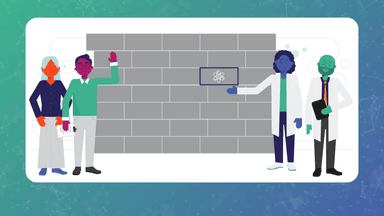
Better Interdisciplinary Research Teams Training Course - developed by the HxC project
5 modules- Course Introduction
- Better Interdisciplinary Research Teams Training Course - developed by the HxC project
- Feedback & Assessment
- Interactive GRID Game
- Resources
View Self Paced Course
 Video
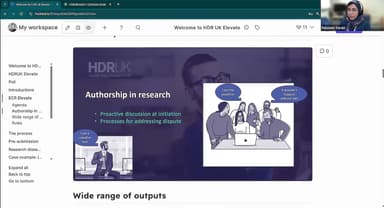
VideoElevate ECR Series: From research dissemination, from submission to acceptance (58:33)
View Video
 Video
VideoElevate ECR Series: AI and Health From Foundational Approaches to Frontier Science (1:05:08)
View Video
 Video
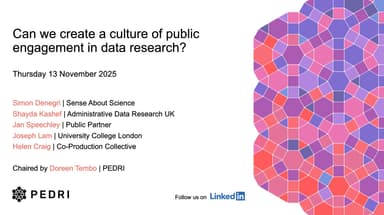
VideoCan we create a culture of public engagement in data research? (1:10:00)
View Video
Who this pathway is for
Early-career researchers - PhD students and postdocs - in any health data discipline; anyone leading or joining an interdisciplinary team for the first time; research managers and training-programme staff who want to improve the culture they run.
Ready to start this pathway?
How interdisciplinary teams actually work, how research gets out into the world, and how to shape a healthy research culture - whichever specialism you choose.